
15338883807
CN/EN
CN/EN
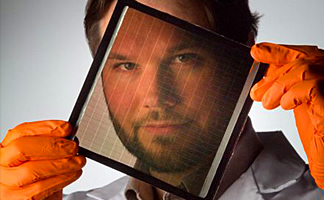
China's photovoltaic manufacturing, represented by solar photovoltaic technology, has evolved from traditional crystalline silicon cells to second-generation thin-film cells. Thin film batteries have advantages such as low cost, low production energy consumption, short energy recovery period, and no environmental pollution.
At present, highly specialized enterprises in China have achieved the highest level of technology in this field through independent research and development and technology mergers and acquisitions.
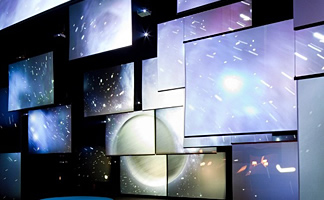
In the context of the overall slowing growth of the global new display industry, the industrialization of new technologies and the mass production of new products have become important driving forces for industrial development. In terms of TFT-LCD technology, after making breakthroughs in the production of independently built high-end LCD panels, enterprises have shifted their focus to the layout of new generation display technology, increasing investment in new technologies such as high resolution, wide viewing angle, low power consumption, and narrow bezel.
We have developed a batch of new products with independent intellectual property rights, gradually introducing new technologies such as low-temperature polycrystalline silicon (LTPS), oxide semiconductor (Oxide), and four channel photomask process into the production line. Our products, including 110 inch 4K × 2K, 98 inch 8K × 4K, 65 inch oxide backplate large-sized LCD TV panels, 6-inch high PPI LTPS TFT mobile phone display screens, are among the international advanced. The ultra-high resolution 55 inch 4K × 2K LCD TV panel has achieved mass production.
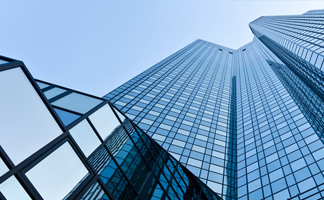
Glass materials were first used in building envelope structures in the 20th century, and since then, glass curtain walls have been favored in the field of architecture. Glass curtain walls have been popularized worldwide. With the development of social economy, the quality of living is no longer limited to comfort, and energy conservation and aesthetics are also important factors in choosing.
Appearance: The appearance of glass curtain walls mainly considers the color of the coating surface on the outer side of the glass, the reflectivity of light, optical deformation, and special glaze effects. The coating color can be very rich, usually with high transmittance and high reflectivity. Old style commercial buildings have low transmittance and high reflectivity; Government buildings generally have low transmittance and low reflectivity, making them appear relatively heavy and stable, so transmittance reflection has a certain degree of coordination significance. The reflectivity of the coating is high for colors that are rich, with gold exceeding the 30% limit. Colorless, the reflectivity will be slightly lower, of course, there are also environmental factors. Sunny days are different from cloudy days. SZOT produces multi-layer nano films, and the color effect observed on sunny days will be better.
Energy saving: The main sources of heat in nature are solar radiation and far-infrared radiation. For radiation, sunlight radiation mainly passes through shading, while far-infrared radiation mainly passes through emissivity, which is actually the absorption rate of far-infrared radiation. It basically does not absorb infrared radiation, and 90% of it is reflected. The most important indicators for measuring the energy efficiency of glass are the SC and U values for heat transfer. The U value can be calculated according to a formula. Regarding the U value: the configuration of a glass structure, as long as the thermal conductivity of the entire material changes, the emissivity decreases, and the thickness of the air changes, these three factors will determine its final K or U value. The thermal conductivity of ordinary glass is 1, because its air thermal conductivity system is only 0.024. The thermal conductivity, emissivity, and thickness of the air layer determine the K value of the glass layer. This is a method to reduce the K value of glass, why is the interlayer K value relatively high? The thermal conductivity has not changed, and the emissivity has not changed. Another factor is the thickness of the air layer. The American standard is the same as the Chinese standard, with a thickness of about 12 being the optimal thickness. According to the European standard, the thickness is about 16. At the same time, depending on the climatic conditions, a deviation of 12 in the north and 16 in the south would be better because the difference lies in the boundary and indoor/outdoor conditions. The Chinese standard U and SC values are always slightly higher. The SC value passes through the glass solar thermal insulation factor, and the overheating effect can be measured entirely by the g value. The SC value is greater than the g value, and the entire solar energy directly passes through at 280-2500 nanometers. Intuitively demonstrate the ability of ordinary glass to isolate infrared radiation, and for the difference between dual silver and single silver, the photothermal ratio will be higher. In northern summer, it is used for shading, the lower the better. Under the same shading coefficient of 0.37, the difference between single silver and double silver is about 35 and 62, with a difference of nearly 30 points. The shading coefficient can be used to measure the shading effect, but the shading effect cannot be measured solely by SC. LSG provides a more scientific evaluation of the lighting and insulation of glass, with single silver achieving 1.2 and 1.3, and double silver achieving 1.5 and 1.6. When it comes to energy conservation, the north focuses on K value, and the south focuses on SC value. Of course, energy conservation has now reached the fourth step, with a cumulative energy savings of 75%.
Soundproofing: Noise pollution is receiving increasing attention from society, and there are still some misconceptions about sound knowledge. The characteristics of sound are characteristic intensity and decibel value. Between 20 Hz and 20000 Hz, a change of 3 decibels cannot be felt, a change of 5 decibels can be felt, and a feeling of 10 decibels is very obvious. Our venue environment is about 50-60 decibels. There are three principles for sound insulation materials. The first is resonance effect, and the second is the surface quality law. The larger the mass, the greater the loss of sound insulation. Generally speaking, doubling the mass will increase the sound insulation value by 6 decibels. At the same time, the sound insulation effect of our ordinary residential door and window 595 structure is not good for the thickness of the air layer. Although there is a 9mm air layer, it is far from meeting the requirements, so the sound insulation value needs to exceed 10 pairs to contribute to sound insulation. At the same time, when the air layer is 12, the added value is about 1 decibel, and with the adjustment factor, doubling it only increases by 3 decibels, so this is related to the thickness and surface quality of the air layer. The coincidence effect, so the sound insulation angle of 8+6 is definitely better than 8+8. In fact, the sound insulation of hollow glass is worse than that of a single piece of glass. A single piece will be smaller than the interlayer, and the interlayer hollow will be better. Ordinary interlayers can reach 38 or 39. If it is like our high-end curtain wall interlayer hollow, this sound insulation is the best configuration, such as 6 or 1. If it is 52 or 8, the sound insulation value will be higher. It is very noisy outside at 80 decibels, but when you pass through glass partitions, the windows need to be coordinated. If the indoor noise level is only 40 decibels, it will be very quiet.
Safety: Tempered glass will self destruct without mechanical external force. In addition to the glass itself, there are design factors as well as installation factors. Not all self explosions are necessarily caused by the glass itself. Five methods to avoid self explosion of tempered glass: firstly, choose high-quality flat glass; The second moderate tempering; The third guarantee is that the surface of tempered glass should be uniform; Fourth, improve the processing quality of tempered glass edges; The fifth limitation is the size of tempered glass. Because the building dimensions are getting larger and larger now, for example, it is recommended not to exceed 3 square meters for 6mm, 4 square meters for 8mm, and 5 square meters for 10mm. It is suggested that everyone try to make the dimensions smaller when considering curtain wall design, which is definitely beneficial for safety. The self explosion solution includes homogenization treatment, interlayer tempering, SGP interlayer, which has excellent performance and high safety, but is very expensive. The fourth is semi tempered interlayer, and the fifth is ultra white glass, because the iron content of ultra white glass is only 1/10 of ordinary glass, and the main advantage is very few defects.

Long Press to Scan QR Code
Scan QR Code
